AI Document Processing for Healthcare
Learn how intelligent document processing automates healthcare workflows, cutting manual errors and cost while supporting HIPAA compliance.
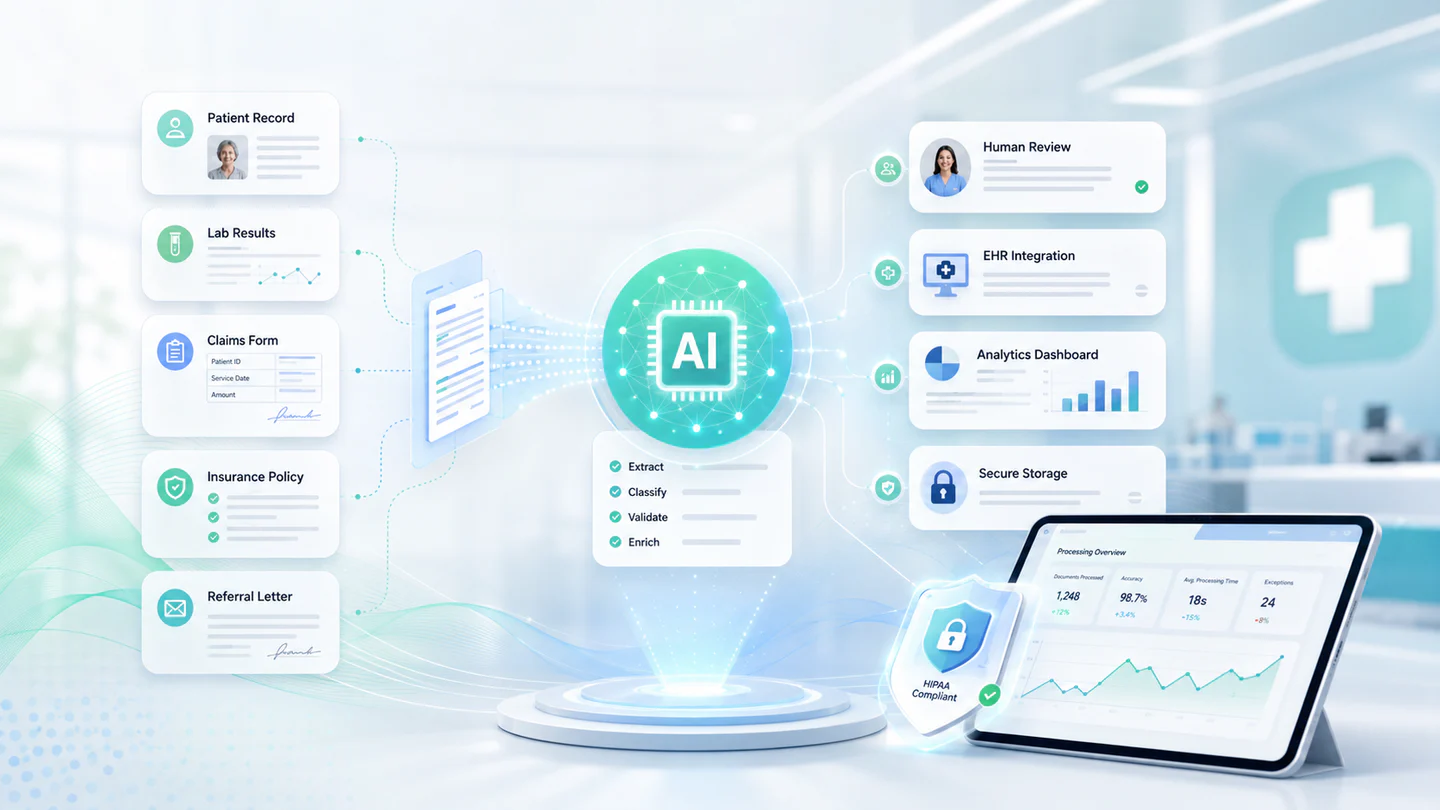
Healthcare organizations process millions of documents daily-clinical notes, lab reports, insurance claims, consent forms, and compliance records. Manual handling consumes an estimated 30-40% of administrative staff time and introduces costly errors affecting patient outcomes, billing accuracy, and regulatory compliance.
Intelligent Document Processing (IDP) combines machine learning, optical character recognition (OCR), and natural language processing (NLP) to automatically classify, extract, validate, and route information from any document type. For healthcare enterprises, this means EHR data entry, claims adjudication, prior authorization, and audit preparation can be largely automated with measurable ROI within 6-12 months of deployment.
What Is AI Document Processing in Healthcare?
AI document processing leverages machine learning and NLP to automate document handling. It converts scanned documents, handwritten notes, and similar materials into structured, usable data through automated data extraction, ensuring accuracy and consistency.
Key Features
- Automated data entry
- Machine learning algorithms
- Natural language processing
- Unstructured to structured data conversion
AI document processing integrates seamlessly into healthcare IT systems while minimizing human error. These systems evolve through continuous learning, offering custom solutions tailored to specific provider needs.
How Intelligent Document Processing Works: Key Technologies
IDP relies on cutting-edge technologies:
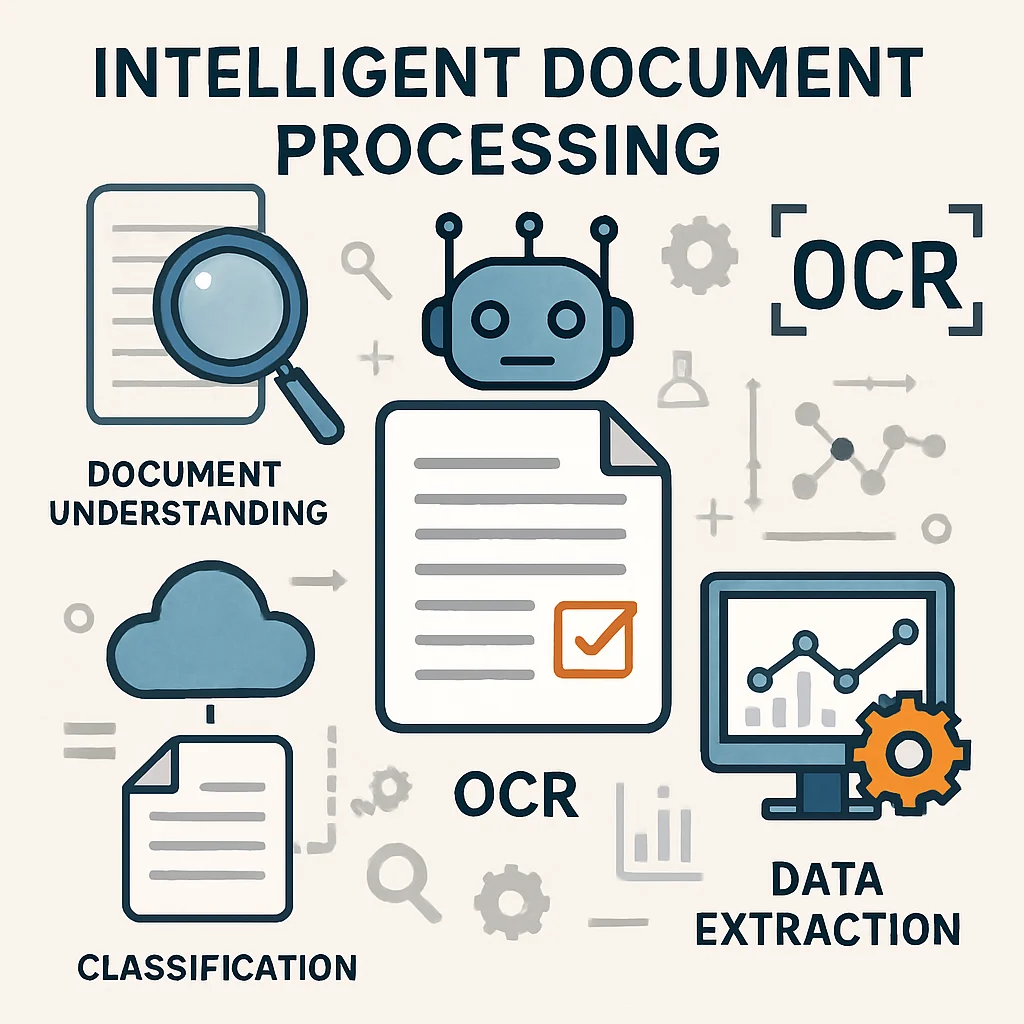
Core Technologies
- Machine Learning: Enables systems to learn from data, improving accuracy over time
- Natural Language Processing (NLP): Allows machines to understand and interpret human language
- Optical Character Recognition (OCR): Transforms images of text into editable, searchable digital text
- Robotic Process Automation (RPA): Automates routine tasks without human intervention
Together, these technologies improve data extraction, accuracy, and speed, enabling healthcare providers to access information promptly for decision-making and improved patient care.
Traditional Document Management vs. AI-Driven Solutions
Traditional healthcare document management is often paper-based and manual, consuming significant time and introducing errors that hinder operational efficiency.
AI-driven solutions automate data extraction and analysis, significantly reducing manual intervention. They deliver several advantages:
Benefits of AI-Driven Solutions
- Enhanced accuracy and speed
- Reduced manual errors
- Automated and real-time data processing
- Seamless integration with current systems
Healthcare enterprises adopting AI-driven solutions experience greater operational efficiency, better data management, and ultimately improved patient care.
Core Benefits of AI Document Processing for Healthcare Enterprises
Immediate Advantages
- Reduction in manual data entry
- Minimized errors and labor costs
- Streamlined billing processes
AI reduces administrative burdens, allowing healthcare staff to focus on patient care. It minimizes manual labor and errors, lowering operational costs while improving accuracy and ensuring precise data handling.
Compliance and Analytics
- Improved regulatory compliance
- Effective predictive analytics
- Better clinical decision-making
AI supports operational efficiency by streamlining billing and insurance claims, reducing processing time and improving cash flow. The integration of AI boosts predictive analytics capabilities, helping healthcare providers anticipate patient needs and make informed decisions.
Common Use Cases of AI Document Processing in Healthcare
Primary Applications
- Automating medical record management
- Streamlining billing and insurance claims
- Enhancing lab report analysis
AI extracts and processes medical records efficiently and organizes lab reports quickly, aiding timely decision-making. For billing and insurance, automating these tasks reduces processing time and facilitates smoother cash flow while decreasing claims processing errors.
Operational Areas
- Timely data for personalized patient care
- Accurate records for regulatory audits
Patient data extraction is crucial for personalized care, while AI aids in maintaining accurate records for audits, ensuring healthcare facilities meet necessary standards consistently. AI also contributes to research by processing vast amounts of historical data, supporting medical research and development initiatives.
Step-by-Step Guide to Implementing AI Document Processing
Initial Steps
- Conduct a thorough needs assessment to determine which organizational areas will benefit
- Define clear objectives for what you aim to achieve
- Select compatible AI technology aligned with organizational goals
Implementation Stages
- Focus on smooth integration with current workflows
- Implement comprehensive staff training to minimize resistance
- Establish ongoing monitoring to regularly evaluate system performance
- Create feedback loops enabling continuous improvement
By following these steps, healthcare enterprises can successfully implement AI document processing while maximizing benefits and mitigating challenges.
Key Challenges and How to Overcome Them
Challenge: High Initial Investment
- Conduct detailed cost-benefit analysis
- Explore flexible financing options
- Determine long-term savings from efficiency gains and error reductions
Challenge: Data Integration
- Prioritize technologies compatible with existing systems
- Ensure collaboration between IT and healthcare staff
- Minimize disruptions while maximizing operational effectiveness
Challenge: Staff Resistance
- Highlight benefits such as reduced workload and improved accuracy
- Provide effective communication and comprehensive training
- Foster acceptance and enthusiasm for change
Ensuring Compliance, Security, and Data Privacy
Essential Steps
- Stay updated with regulatory changes
- Implement robust encryption and authentication processes
- Conduct regular security audits and vulnerability assessments
- Ensure transparency in data handling processes
Healthcare organizations must maintain strict adherence to regulations like HIPAA to protect patient data. Implement robust encryption for data at rest and in transit. AI systems should incorporate privacy-by-design principles, ensuring patient information is only accessible to authorized personnel.
Best Practices for Successful Adoption
- Align AI initiatives with your organization’s goals
- Provide comprehensive training sessions for staff
- Involve cross-functional teams to foster collaboration
- Regularly assess system performance and make necessary adjustments
Following these practices increases the likelihood of successfully implementing AI solutions, leading to improved operational efficiency, cost savings, and enhanced patient care.
Future Trends: The Evolving Role of AI in Healthcare Document Management
Expected Future Developments
- Enhanced predictive analytics capabilities
- Real-time data processing improvements
- Advanced diagnostic tools
AI in healthcare continuously evolves, with predictive analytics enabling healthcare providers to anticipate needs through trend analysis. Emerging technologies will further enhance capabilities with more intuitive interfaces and improved diagnostic tools, transforming healthcare document management while promoting efficiency and enhancing patient care.
Conclusion: Unlocking the Full Potential of AI in Healthcare
AI document processing holds immense potential for healthcare operations, patient outcomes, and cost reduction. By automating tedious tasks, healthcare professionals can focus on patient care. Successful implementation requires thoughtful planning to address challenges like data privacy and regulatory compliance. Embracing AI technologies ensures better data management and operational efficiency, leading to a more responsive, efficient, and patient-centered healthcare system.