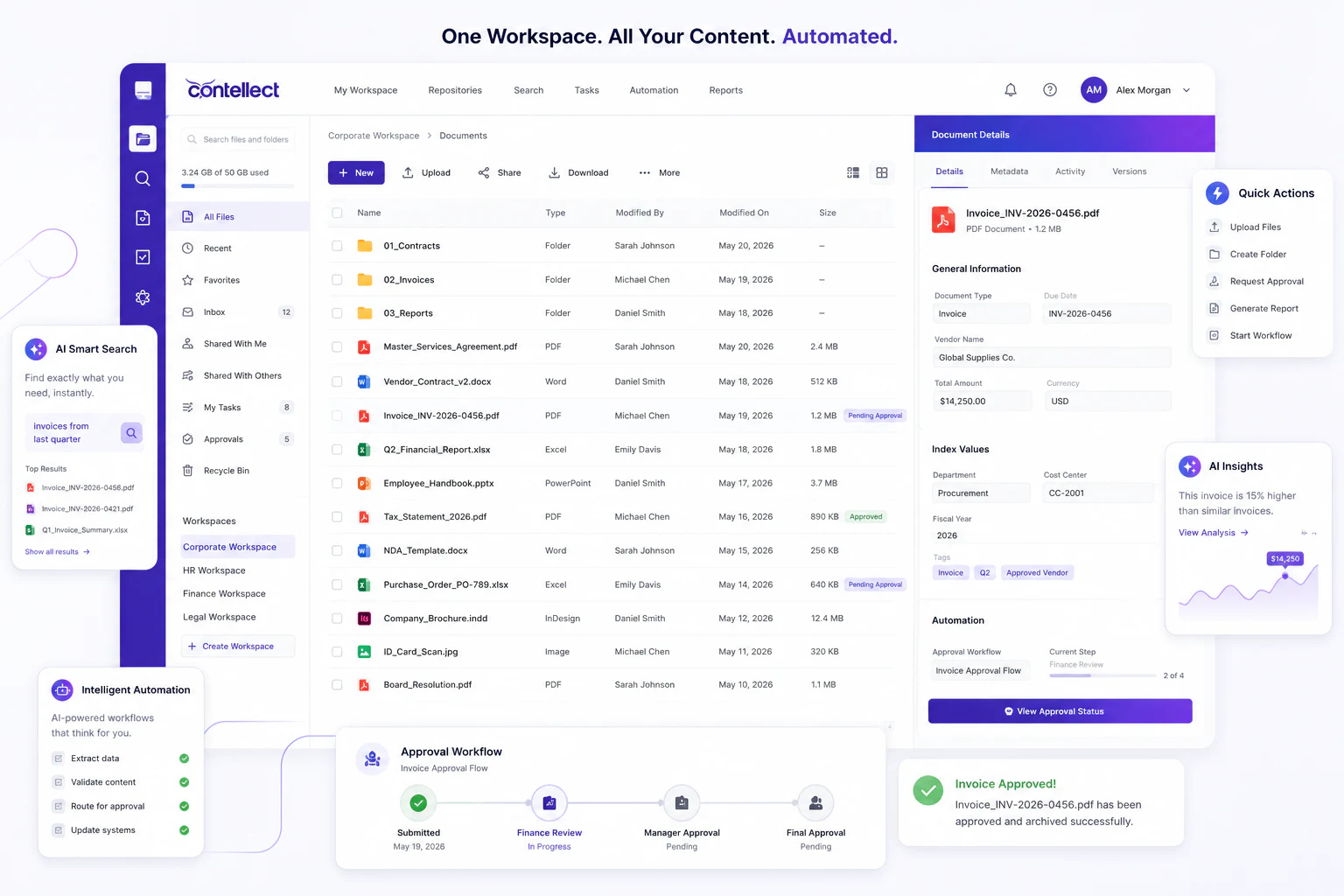
What Is a Document Management System (DMS)?
A guide to Document Management Systems: how a DMS streamlines storage, automates workflow, and supports enterprise compliance and security.
What is a Document Management System (DMS)?
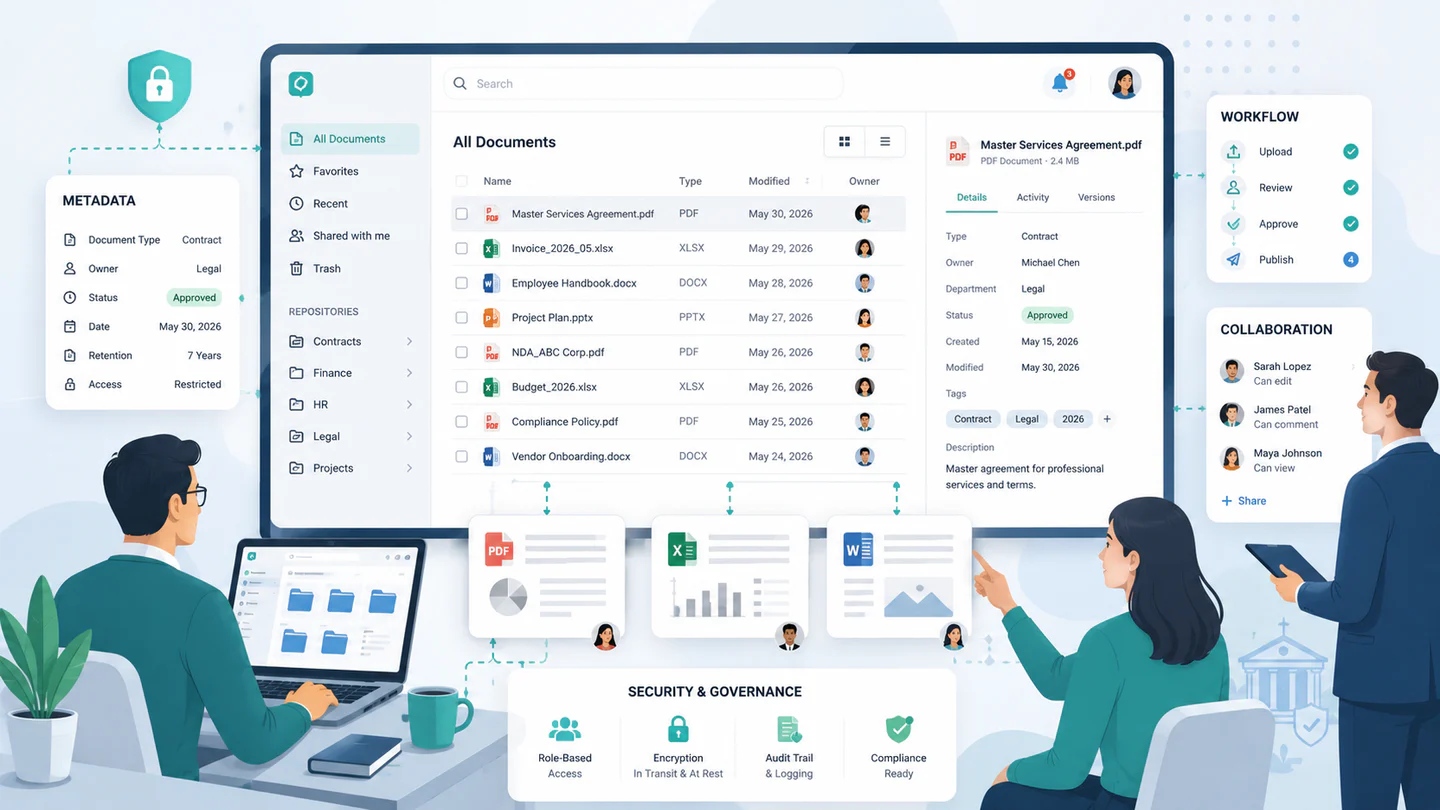
A Document Management System (DMS) is a software tool designed to manage, store, and track documents electronically. It offers a centralized platform for document handling that improves efficiency of document-related processes through structured storage and retrieval.
Key features include version control, access management, and secure document archiving.
Benefits of a DMS include:
- Streamlined document storage and retrieval
- Enhanced workflow automation
- Improved security and compliance measures
A DMS can be tailored to fit various organizational needs, with options for cloud-based, on-premises, or hybrid deployment.
Key Features of a Document Management System
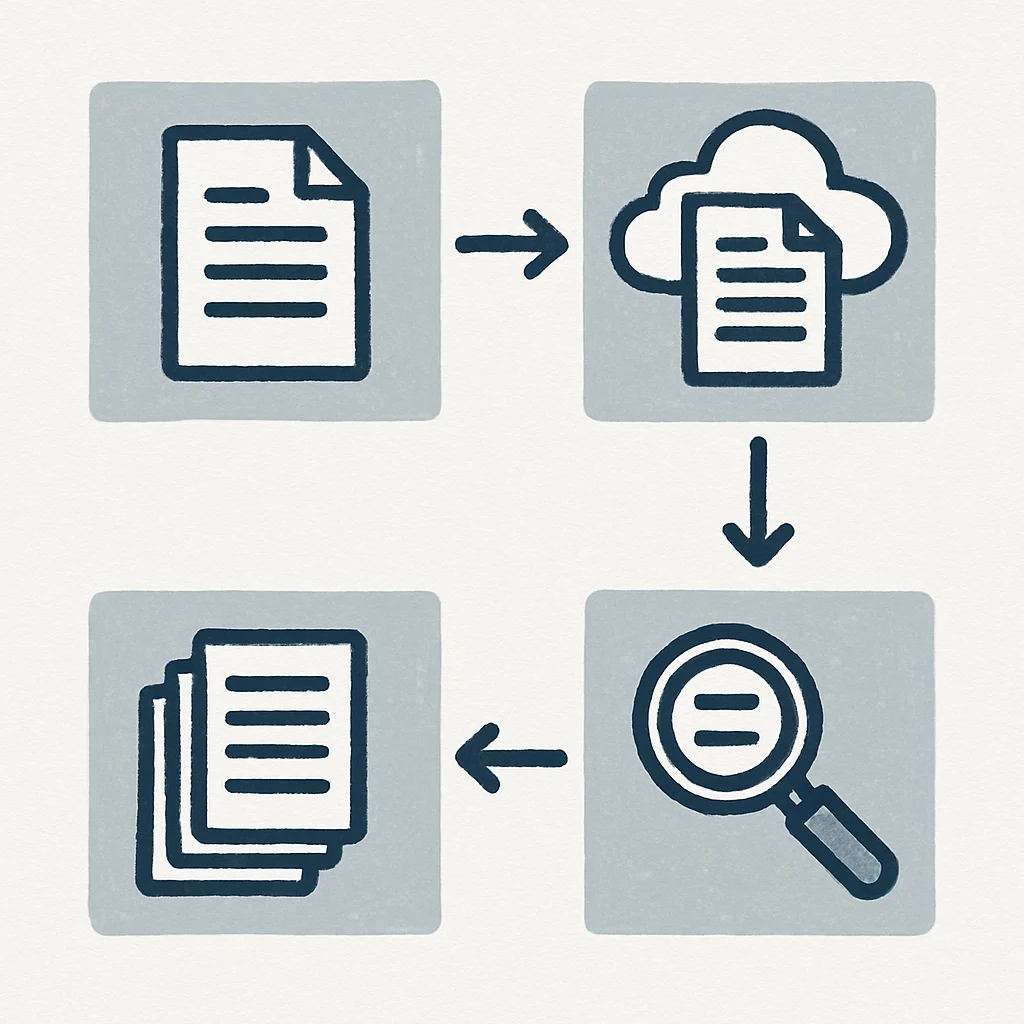
Centralized document storage ensures organized and efficient access to information. Version control prevents data loss and ensures users work with the latest versions.
Access control mechanisms protect sensitive data by restricting document access based on user roles. A DMS supports comprehensive search capabilities, allowing users to retrieve documents quickly using keywords or metadata.
Critical features include:
- Centralized document storage
- Version control and access management
- Advanced search and compliance tools
Integration with existing systems is vital for seamless operations, connecting with enterprise solutions like CRM and ERP systems.
Types of Document Management Systems: On-Premises, Cloud, and Hybrid
On-premises DMS solutions are installed locally on company servers, providing full control over data and security but requiring significant IT resources for maintenance and updates.
Cloud-based DMS solutions offer flexibility and scalability. These systems are hosted on remote servers and accessed via the internet, allowing enterprises to easily scale storage needs and support remote work.
Hybrid DMS solutions combine benefits of both approaches, allowing businesses to store sensitive data locally while leveraging the cloud for wider accessibility and reduced hardware needs.
Workflow Automation in DMS
Workflow automation simplifies complex processes by automating repetitive tasks, leading to increased efficiency and reduced human error.
A DMS with workflow automation handles document routing and approval processes seamlessly, ensuring documents move through necessary stages with minimal delay. Automated workflows enhance compliance by tracking document changes and approvals, providing a clear audit trail.
Automation features in DMS include:
- Automated document routing
- Approval process management
- Notification and alert generation
Implementing workflow automation enables employees to focus on more strategic tasks, driving overall business growth.
Document Storage and Organization
Effective document storage provides a centralized repository for all files, ensuring they are easily accessible and organized. This eliminates the need for paper archives and reduces storage costs.
A well-structured DMS uses metadata and categorization to allow for fast searches. This enhances productivity by reducing time spent locating necessary documents.
Key features of document storage in DMS include:
- Centralized repository for all documents
- Metadata and categorization for easy retrieval
- Reduced need for physical storage
Security, Compliance, and Access Control
Security is paramount in a Document Management System. A robust DMS includes features like encryption, user authentication, and audit trails.
Compliance with regulations is essential for businesses. A DMS helps maintain data integrity and confidentiality, supporting compliance with industry standards and legal requirements, such as GDPR.
Access control features allow precise management of document visibility, with organizations defining user roles and permissions to ensure only authorized personnel access sensitive documents.
Key security features include:
- Encryption and user authentication
- Audit trails for tracking access
- Defined user roles and permissions
Integration Capabilities and Collaboration
A Document Management System enhances enterprise operations through seamless integration with systems like CRM and ERP, ensuring streamlined workflow and data consistency.
A DMS facilitates real-time collaboration, enabling multiple users to work on documents simultaneously. This improves productivity and reduces turnaround times for document-related processes.
Benefits of Implementing a DMS in the Enterprise
Adopting a Document Management System provides significant advantages. One major benefit is reduced operational costs through minimized paper usage and physical storage needs.
A DMS also boosts productivity, as employees spend less time searching for documents due to efficient storage and retrieval features.
Key benefits of a DMS include:
- Enhanced data security
- Improved regulatory compliance
- Cost savings through reduced paper usage
- Increased productivity with better document access
Future Trends in Document Management Systems
The landscape of Document Management Systems continues to evolve with technology.
Key developments to watch include:
- Integration of Artificial Intelligence for smart document handling
- Enhanced mobile accessibility for on-the-go document management
- Greater emphasis on data security and compliance
How Modern DMS Platforms Are Transforming Business Operations
The shift from paper-based filing to purpose-built document management systems is one of the most impactful operational transformations an organization can undertake. Modern DMS platforms address the full document lifecycle, from capture and classification through version control, collaborative editing, approval workflows, and legally compliant archiving.
DMS vs. ECM: Choosing the Right Scope
Document Management Systems are frequently compared to Enterprise Content Management (ECM) platforms. The distinction matters for procurement and architecture decisions:
- DMS focuses on structured documents with version control, metadata tagging, search, and workflow routing as core capabilities.
- ECM is a superset encompassing document management plus web content management, digital asset management, records management, case management, and business process automation.
For most mid-market organizations, a modern DMS delivers substantial value at lower cost and implementation complexity.
Advanced DMS Capabilities: AI and Automation
Next-generation document management systems incorporate artificial intelligence to move beyond passive storage toward active, intelligent document operations:
- Intelligent document classification - Machine learning models automatically identify document types and extract key data fields without manual intervention.
- Natural language search - Users query the repository in plain language rather than navigating folder hierarchies.
- Automated workflow routing - Documents are automatically routed based on document type, content, and business rules.
- Anomaly detection - AI identifies unusual access patterns, duplicate documents, and policy violations in real time.
DMS Integration With Enterprise Systems
Integration with systems where work actually happens is essential for adoption and ROI:
- Microsoft 365 and SharePoint - Edit documents with DMS handling version control and access governance.
- Salesforce CRM - Customer contracts and correspondence surfaced within opportunity and account records.
- ERP Systems (SAP, Oracle, NetSuite) - Financial documents linked to transactions for complete audit trails.
- E-signature platforms - Signature workflows initiated from the DMS with executed originals automatically archived.
Building the Business Case for DMS Investment
Quantifying ROI requires measuring both hard cost savings and productivity benefits. Hard cost savings include reduced physical storage costs, lower printing expenses, eliminated manual data re-keying, and reduced audit preparation time.
Productivity benefits include faster document retrieval, shorter approval cycles, and reduced time searching for documents. For regulated industries, compliance assurance and risk mitigation often provide the most compelling business case value.