Frontline Teams
Ask customer, policy, service, or procedure questions and get relevant content quickly.
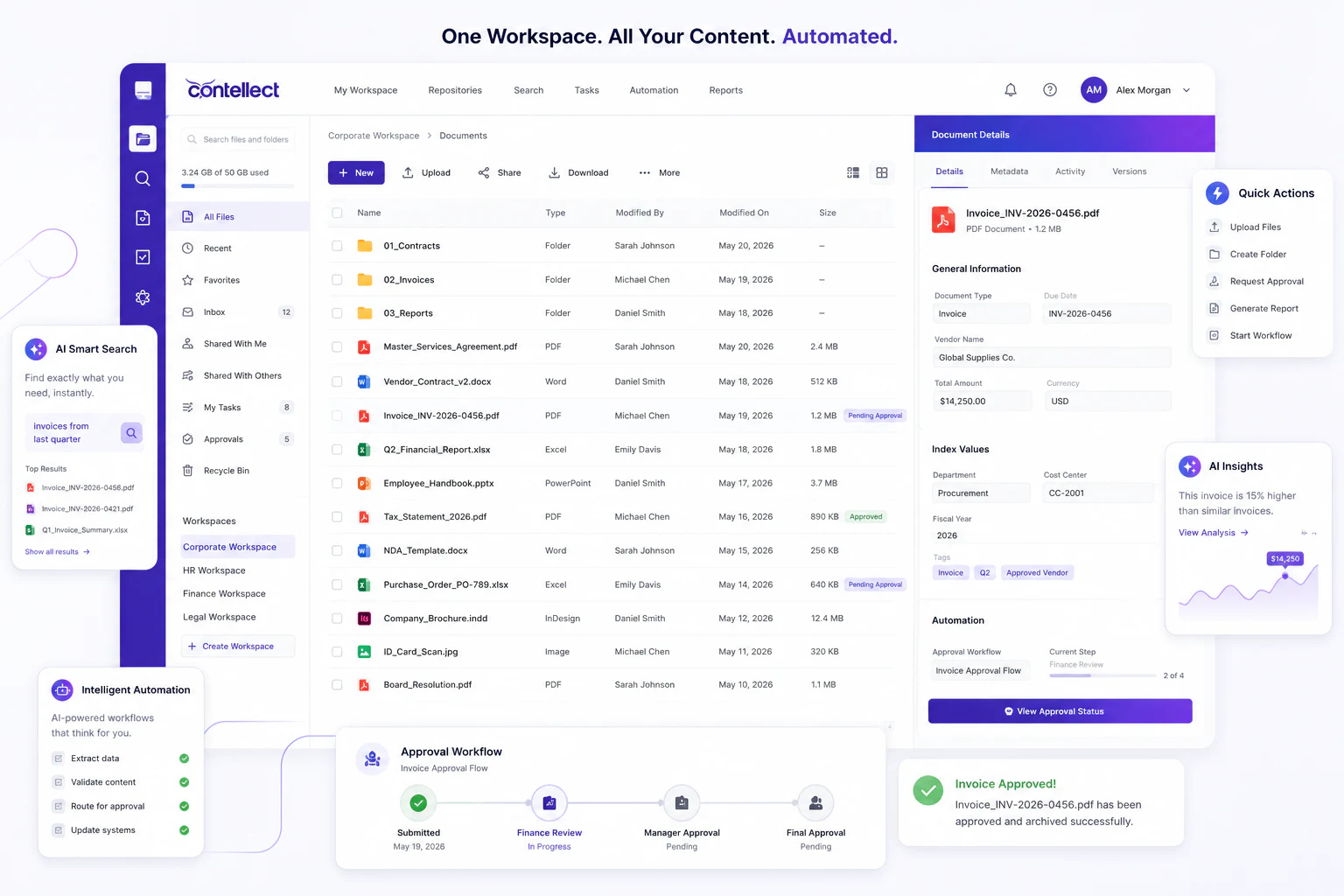
Search enterprise content in plain language with semantic, permissions-aware, NLP-powered search that understands business intent and context.
Natural language-based search lets users ask questions in normal language instead of constructing exact keyword queries. Contellect One interprets intent, searches governed enterprise content, respects permissions, and returns relevant documents, passages, and answers based on meaning and context.
Natural language search helps employees find information even when they do not know exact document names, metadata, or folder paths.
Ask customer, policy, service, or procedure questions and get relevant content quickly.
Find reports, evidence, approvals, and decisions by describing the need.
Search policies, controls, records, and evidence with context-aware queries.
Analyze common questions and content gaps to improve knowledge quality.
Users ask a question, Contellect One interprets intent, retrieves relevant governed content, and returns precise results or source-backed answers.
Find the right policy section by asking a question in everyday language.
Improve self-serviceLocate archived documents, approvals, and case evidence by context.
Speed up auditsAsk for agreements, requests, or service history tied to a customer.
Improve service speedFind clauses, terms, obligations, renewal dates, and risk language.
Reduce review timeRetrieve answers across manuals, FAQs, tickets, and process guides.
Reduce repeated questionsUse retrieval results to generate grounded answers with citations.
Improve answer qualityThe strongest natural language search experiences combine clean content, metadata, permissions, semantic indexes, and feedback loops.
Connect documents, knowledge bases, records, and business files.
Add metadata, entities, synonyms, document types, and business relationships.
Tune natural language behavior, filters, ranking, and answer options.
Use search analytics to close content gaps and refine results.
Users do not need to know metadata, repository structure, or exact terms.
Semantic retrieval returns relevant content even when wording differs.
Natural language retrieval creates the foundation for grounded AI answers.